
Business Intelligence (BI) is a process that collects, analyzes, and provides useful information for business purposes. This process supports strategic and operational decisions by giving decision-makers quick access to available information. Business Intelligence can be delivered in various forms, ranging from simple daily reports to advanced analytical systems. By utilizing Business Intelligence, companies can monitor their operational performance, track business trends, and detect potential opportunities or threats. To maximize the benefits of Business Intelligence, companies must be able to implement it correctly and on target.
Business Intelligence (BI) is a process used to collect, analyze, and present data for business purposes.
Business Intelligence (BI) is a process that assists decision-makers in collecting, analyzing, and presenting data for business purposes. It serves to facilitate the analysis of data stored across multiple systems to obtain constructive information or compare various critical business insights. With this, organizations are able to see the big picture of a business and provide answers to crucial questions about how they can achieve their goals.
BI can help companies get an overall picture of their operations and provide the insights needed to make the right decisions.
Business Intelligence (BI) is a valuable tool that can help companies improve business management and expand their knowledge of how their business operations are running. In other words, BI provides a helicopter view of the current business situation, allowing companies to view past performance, detect trends, connect with strategic partners, and much more. It is an effective way to gather an overall picture of company operations and provide the necessary insights to make accurate decisions quickly. Thus, BI becomes a crucial asset for the long-term success of all modern organizations.
BI can also be used to track business trends, such as sales or product usage, and provide essential information for companies to compete effectively in the market.
Business Intelligence (BI) has grown rapidly since it first emerged. Although initially used only to analyze financial data, BI can now be used for many other purposes. One of the main benefits derived from BI is tracking business trends. The drill-down feature, often referred to as drill-down/drill-up, is also crucial for those who want to ensure the effectiveness of business activities. This feature can provide information from the top/surface level and drill down to the lowest or most detailed level for various data, such as sales and product usage. By drilling down to the level of individual data-driven business activities, IT and business teams can collaborate to ensure every strategy is oriented around data and facts, rather than gut feelings or human guesswork.
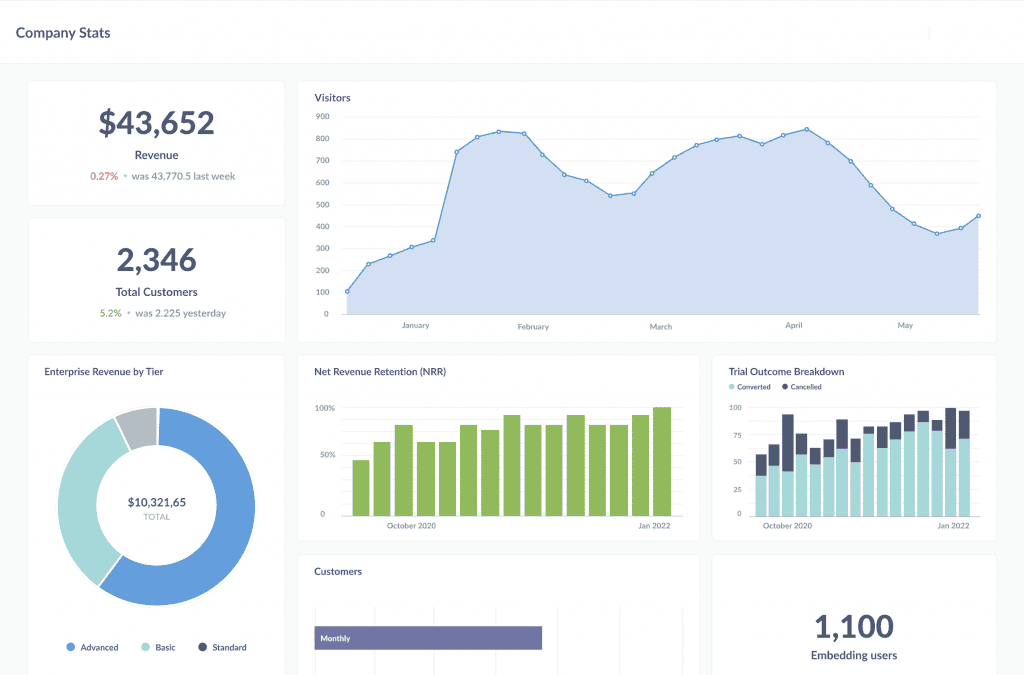
With all the advantages mentioned above, Business Intelligence is the perfect solution for companies to formulate effective business strategies. By using BI, companies can make smart, data-driven decisions that will help them gain the information and insights needed to achieve success. The BI process also allows companies to track the latest trends, such as new service providers, sales trend patterns, or product usage, and evaluate their competitive strategies. Therefore, Business Intelligence provides significant benefits for all organizations operating at any scale to continue advancing in the market.